The Loss of Belonging in Modern Society
Exploring the loss of social containers and the lack of inner structure.
"What happens when something that once contained us dissolves and we have not yet developed an inner structure capable of replacing it?"
Many people today report feeling anxious, disconnected, lonely, or uncertain about who they are. While these experiences are often viewed as individual psychological struggles, they may also reflect broader cultural changes. As traditional sources of meaning, belonging, and identity continue to weaken, many people are left searching for new ways to orient themselves in an increasingly complex world.
For centuries, philosophers, psychologists, and researchers have explored the balance between content and container, between freedom and form, between that which supports us and that which allows us to expand. In symbolic traditions, this tension is expressed through the polarities of the masculine and feminine, anima and animus, order and chaos.

For much of human history, the primary problem was a lack of possibilities. Human beings were occupied with ensuring their survival, building security, finding food, protection, and belonging. As Maslow's hierarchy of needs suggests, much of individual and collective energy was invested in the foundations of existence.
Today, the situation is profoundly different. In Western societies, we are witnessing an exponential growth of possibilities. We can choose our work, our lifestyle, our relationships, our beliefs, our cultural and spiritual affiliations. This expansion undoubtedly represents an important achievement in human consciousness.
And yet, the more possibilities increase, the more a question emerges that we rarely ask ourselves:
How free is an individual who no longer knows how to orient themselves?
Over recent decades, we have witnessed the gradual dissolution of many social containers that, for centuries, provided orientation, meaning, and belonging.
Religion.
Family.
Local communities.
Cultural traditions.
Rites of passage.
Collective identities.
The sense of belonging to a story greater than ourselves.
The purpose of this reflection is not to determine whether these containers were right or wrong, functional or dysfunctional. Every individual develops a unique relationship with them, and each carries both light and shadow.
The question that interests me is another:
What happens when something that once contained us dissolves and we have not yet built something sufficiently solid in its place?
Freedom a Central Human need
Every era seems to confront specific collective themes. I believe one of the central themes of our time is freedom.
At its highest expression, freedom allows us to dissolve old chains, interrupt oppressive dynamics, and give voice to aspects of the human being that have remained excluded or silenced for too long. Yet this inevitably brings with it its shadow aspect.
Freedom can become an endless pursuit of personal gratification, a form of radical individualism in which personal desire becomes the sole criterion for orientation.
The old containers had problems. At times they were rigid, oppressive, or limiting.
But they also served a fundamental psychological function.
They offered meaning.
They offered belonging.
They offered orientation.
If we dismantle them, we must ask ourselves what will replace them.
Take religion, for example.
Beyond the differences between traditions, connection with the sacred offered answers to the great questions of existence. It provided a sense of belonging to a larger order and a relationship with something that transcended the individual.
Today, many people have moved away from traditional religious structures. This does not mean that the needs those structures fulfilled have disappeared.
As thinkers such as Jung, Frankl, Fromm, and Perel have observed, when the sacred disappears, the need does not disappear. It simply shifts.
It is projected onto a partner.
Onto children.
Onto work.
Onto success.
Onto money.
Onto politics.
Even onto spirituality itself.
Human beings continue to need belonging, meaning, recognition, devotion, and love. These needs seem to belong to our deepest nature.
Family provided identity, continuity, and belonging.
Local communities created bonds, mutual responsibility, and support.
Culture and tradition placed the individual within a story greater than themselves.
Shows within the system: responsibility and a psychological cost.
Over recent decades, we have become increasingly aware of the shadows within these systems and have begun to question them. This has brought enormous benefits.
Greater freedom.
Greater self-determination.
Greater possibility for self-expression.
But every freedom also carries responsibility and a psychological cost.
Today we are simultaneously witnessing an increase in loneliness, relational fragility, identity crises, chronic anxiety, feelings of non-belonging, and difficulties in building stable and meaningful relationships.
I do not believe this happens because of a single cause. But I do believe that the simultaneous loss of many social containers is contributing to a form of collective disorientation.
In therapeutic work there is a fundamental principle. Before dissolving a dysfunctional structure, we work to strengthen new internal resources. No responsible therapist would dismantle a person's defences without first helping them build a sufficiently solid foundation.
When this does not happen, a void emerges. Gestalt therapy also speaks of the so-called "creative void": a phase of suspension in which old certainties dissolve but new ones have not yet emerged.
It is a fertile space, but also an extremely destabilising one.
Perhaps, as a society, we are going through something similar.
External containers are weakening faster than our capacity to build internal ones. As a result, the individual finds themselves free to choose everything, yet no longer knows who they are.
The more possibilities increase, the greater the risk of confusion. The more identities become possible, the more difficult it may become to root oneself in any one of them. Freedom without orientation can become disorientation.
At times I feel that the world I grew up in dissolved very quickly. I no longer fully identify with traditional values. Yet I do not fully identify with the emerging ones either. I experience a kind of cultural orphanhood.
As though many of the reference points that supported previous generations have gradually dissolved without being replaced by something equally solid.
I do not wish to romanticise the past. Many of the changes that occurred were necessary. But every choice carries consequences. And today I find myself asking:
What happens when everything becomes modifiable?
What happens when nothing is stable enough to provide continuity?
If I can be anything, who am I really?
If every identity is temporary, where does belonging come from?
Finding balance between Freedom and Form
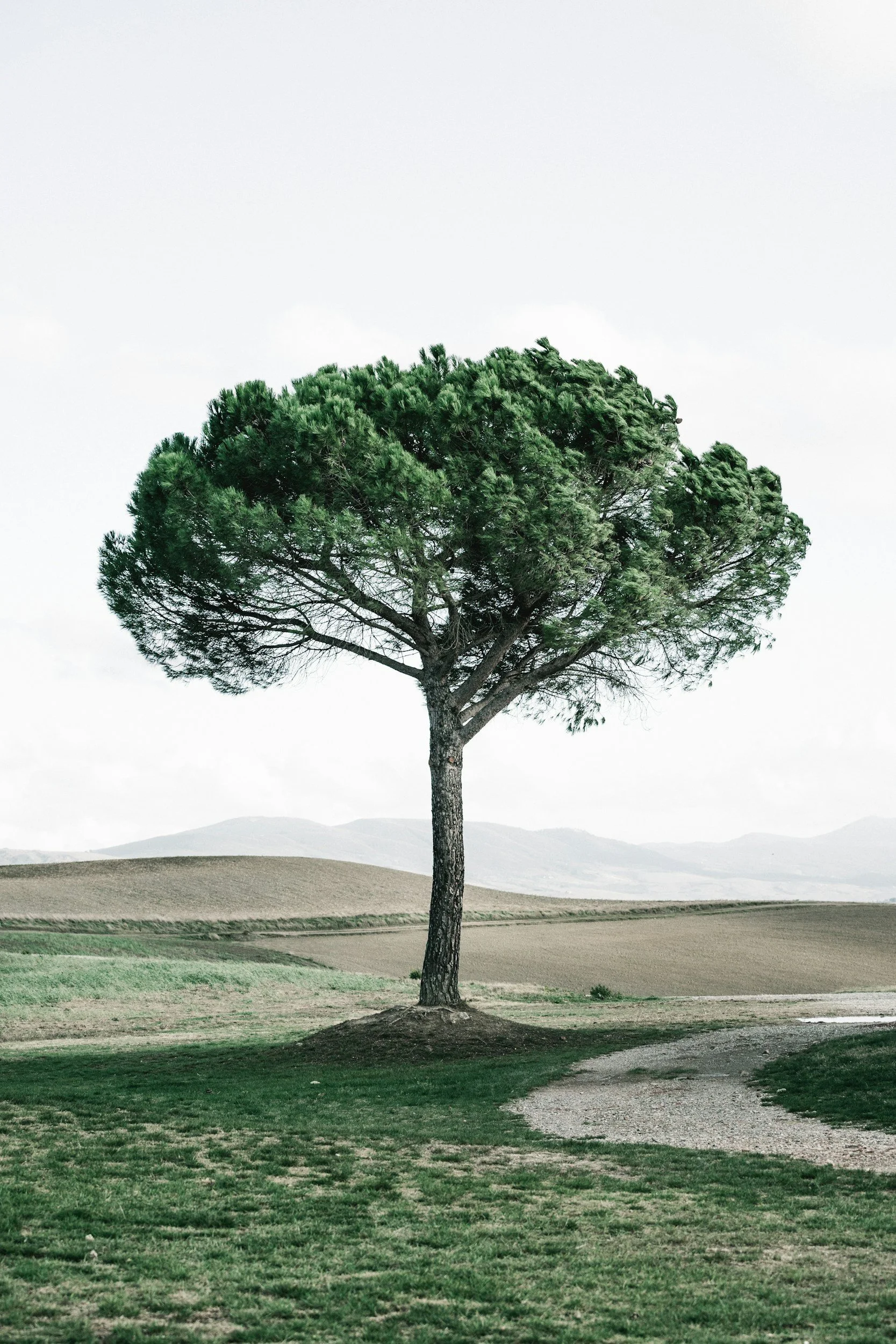
Paradoxically, human beings seem to need both freedom and form. A tree grows because it is alive and free to expand. But it also grows because it has roots that anchor it to the earth. Without roots, it does not become freer.
It is simply carried away by the wind.
Perhaps part of the contemporary crisis begins precisely here
We have learned to deconstruct almost everything.
Traditions.
Roles.
Belonging.
Institutions.
Identities.
What we have learned far less is how to rebuild. And so we risk finding ourselves in a paradoxical situation:
Free from every definition, yet incapable of knowing who we are. Because identity is not only self-expression. It is also containment.
Definitions, roles, affiliations, and even limitations offer a structure within which personality can develop. When every boundary is perceived exclusively as a limitation, we risk losing its positive function: the capacity to give shape. Identity does not arise from freedom alone. It emerges from the meeting point between freedom and limitation. Perhaps the real question is not: "Can I be anything?"
But rather: "What is the core of me that remains when all identities change?"
This is an ancient tension. Between freedom and form.
Between change and permanence. Between fluidity and containment.
Psychological health is probably not found at either extreme, but in the ability to hold both together.
Personally, I deeply support freedom, exploration, and the authentic expression of the human being. Not in the sense of egoic individualism, but as the possibility of exploring new forms of what it means to be human.
At the same time, I recognise how difficult it is to orient ourselves within an increasingly complex, fragmented, and unpredictable world.
When we develop a sufficiently solid inner structure, we can begin to navigate through an internal compass.
We can discern. We can choose.
We can remain faithful to ourselves even when the world changes.
But I believe that, collectively, we are still in the middle of this process.
Perhaps the challenge of our time is not to rigidly return to the old containers, nor to destroy them completely.
The challenge is to understand which structures deserve to be preserved, which need to evolve, and which new forms of belonging can emerge without losing what human beings have always sought:
a sense of home in the world.