The Chakra System. What are Chakras, and where are they located?

What Is the Chakra System?
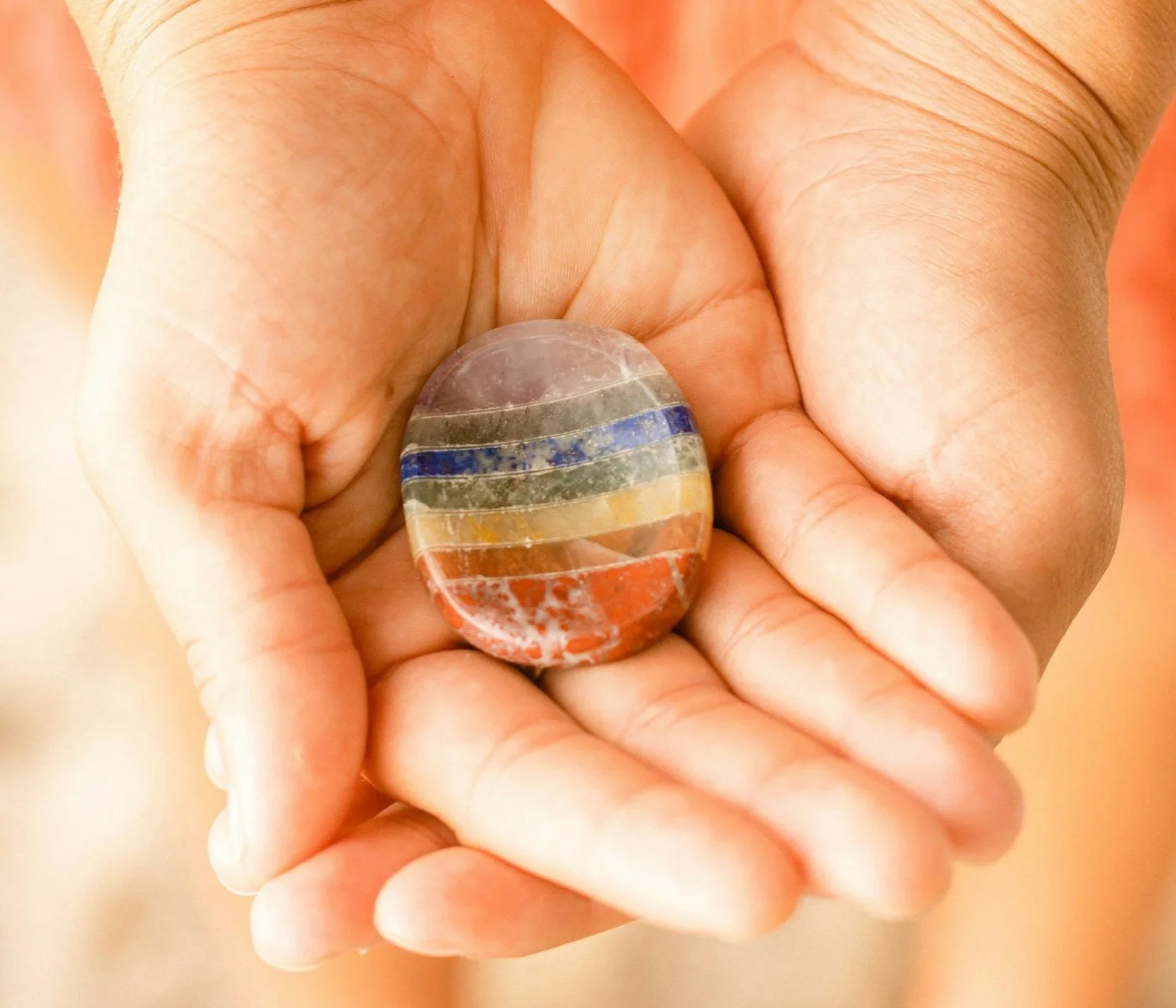
The chakra system is an ancient framework describing the body as an interconnected network of energy centres. The word chakra comes from Sanskrit and means “wheel” or “disc,” symbolising the continuous movement of life force energy through the body. In traditional teachings, chakras are subtle energy centres located along the spine. Each one is associated with specific physical, emotional and psychological themes. While chakras are not measurable in conventional medical terms, they offer a symbolic map for understanding how emotions, stress and life experiences affect the body.
Chakras are both entrances and exits for the cosmic life force, prāṇa. The Chakras, also called wheels, altars or energy centres, are located along the vertebral column at the crossing points of the Nadis. Almost everyone "sees" and "feels" the Chakras as funnels that rotate, simultaneously sliding the energy back and forth. The first and seventh Chakras have vertical emission. Muladhara, the first Chakra, is connected to the telluric, earthy energies, and Sahasrara, the seventh Chakra, is connected to the celestial, divine energies. The remaining Chakras have a posterior and anterior correspondence, and their emission is horizontal.
The Seven Main Chakras and Their Themes

1. Root Chakra (Muladhara) | Safety and Survival
Located at the base of the spine, this chakra relates to stability, security and basic needs. When imbalanced, it may manifest as anxiety, fear or chronic stress.
2. Sacral Chakra (Svadhisthana) | Emotions and Creativity
Associated with pleasure, sexuality and emotional expression. Imbalance may show as emotional suppression or instability.
3. Solar Plexus Chakra (Manipura) | Power and Self-Worth
Connected to confidence, autonomy and personal strength. Dysregulation may appear as shame, control issues or low self-esteem.
4. Heart Chakra (Anahata) | Love and Connection
Linked to compassion, relationships and emotional openness. Blockages may reflect relational wounds or difficulty with intimacy.
5. Throat Chakra (Vishuddha) | Expression and Truth
Associated with communication and authenticity. Imbalance can manifest as difficulty speaking up or chronic tension in the throat and neck.
6. Third Eye Chakra (Ajna) | Insight and Awareness
Connected to perception, intuition and clarity. Imbalance may relate to confusion or overthinking.
7. Crown Chakra (Sahasrara) | Meaning and Integration
Associated with higher awareness and connection to something larger than oneself.

The Earth Star Chakra: Meaning, Grounding and Energetic Stability
The Earth Star Chakra is described as an energy centre located approximately 12–18 inches below the feet and is commonly associated with the colours brown, black, or black and white, tones that symbolise grounding, anchoring and connection to the physical world.
In extended chakra systems, it is considered the foundation of the 12-chakra model, acting as an energetic anchor that integrates spiritual awareness into everyday life. Traditionally, it is linked to grounding and stability, connection to the Earth’s magnetic field, physical wellbeing (including bones and structural support), ancestral patterns, karmic cycles and collective consciousness.
A balanced Earth Star Chakra symbolises the ability to discharge excess emotional activation and reconnect with physical reality, supporting anxiety reduction, nervous system regulation, emotional stability and a deeper sense of safety. Rather than viewing grounding purely in mystical terms, it can also be understood as strengthening the relationship between body, environment and awareness. When imbalanced, it may manifest as dissociation, instability, chronic fear or difficulty feeling present.

Muladhara (Root Chakra): Meaning, Balance and Grounding Stability
Muladhara comes from the Sanskrit words Mula meaning “root” and Adhara meaning “support” or “base.” Known as the Root Chakra, it is located at the base of the spine, near the coccyx, and is traditionally described as the point where Kundalini energy rests. Associated with the element of Earth, the colour red, the adrenal glands, the mantra Lam, and the sense of smell, this chakra symbolises stability, strength and survival. Its symbolic animal, the elephant (and sometimes the serpent), represents grounded power and primal life force.
Muladhara is linked to the bones and skeletal structure, teeth, nails, feet and legs, as well as the large intestine, kidneys, coccyx and anus, all areas connected to structure, elimination and physical support. Energetically, it creates a bridge between the body and the Earth’s stabilising forces, anchoring awareness in the present moment.
Psychologically, it governs survival instincts and essential needs such as safety, shelter, food and belonging. When balanced, it supports vitality, resilience and the ability to cope with stress and fear without becoming ruled by them. True Root Chakra balance arises when we meet our material needs responsibly while remaining grounded, embodied and internally secure rather than dependent on external conditions for stability.
Svadishtana (Sacral Chakra): Emotion, Desire and Creative Flow
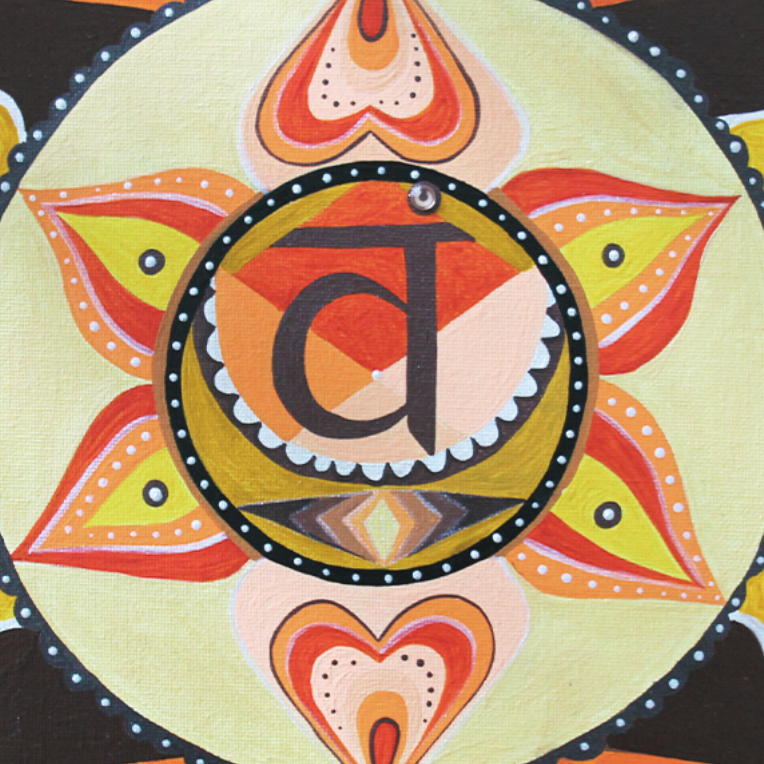
“Swa” means “to take pleasure in,” and “Adhisthana” means “abode” or “seat.” Svadishtana, known as the Sacral Chakra, is located in the lower abdomen below the navel and represents our emotional and creative centre. Associated with six petals, the element of Water, the colour orange, the gonads, the mantra Vam, and the sense of taste, this chakra symbolises fluidity, movement and the capacity to feel deeply.
Its symbolic animal, the crocodile, reflects instinct, power and the unconscious emotional world. Physically, it connects to the ovaries and prostate, the womb or uterus, the small intestine and bladder, as well as the immune system and body fluids such as lymph and blood. Psychologically and energetically, Svadishtana governs emotions, desire, pleasure, creativity, intimacy and the inner child. It is closely linked to childhood experiences, motherhood, relational bonds and the drive to manifest dreams into reality.
When balanced, this chakra supports healthy emotional expression, creative vitality and the ability to experience pleasure without attachment or excess. When imbalanced, it may manifest as emotional instability, co-dependency, blocked feelings, possessiveness, jealousy, guilt, suppressed desire or compulsive passion. In integrative and somatic work, Sacral Chakra balance reflects the capacity to feel safely, regulate emotional waves and move through change with fluidity rather than fear.
Manipura (Solar Plexus Chakra): Personal Power and Inner Fire
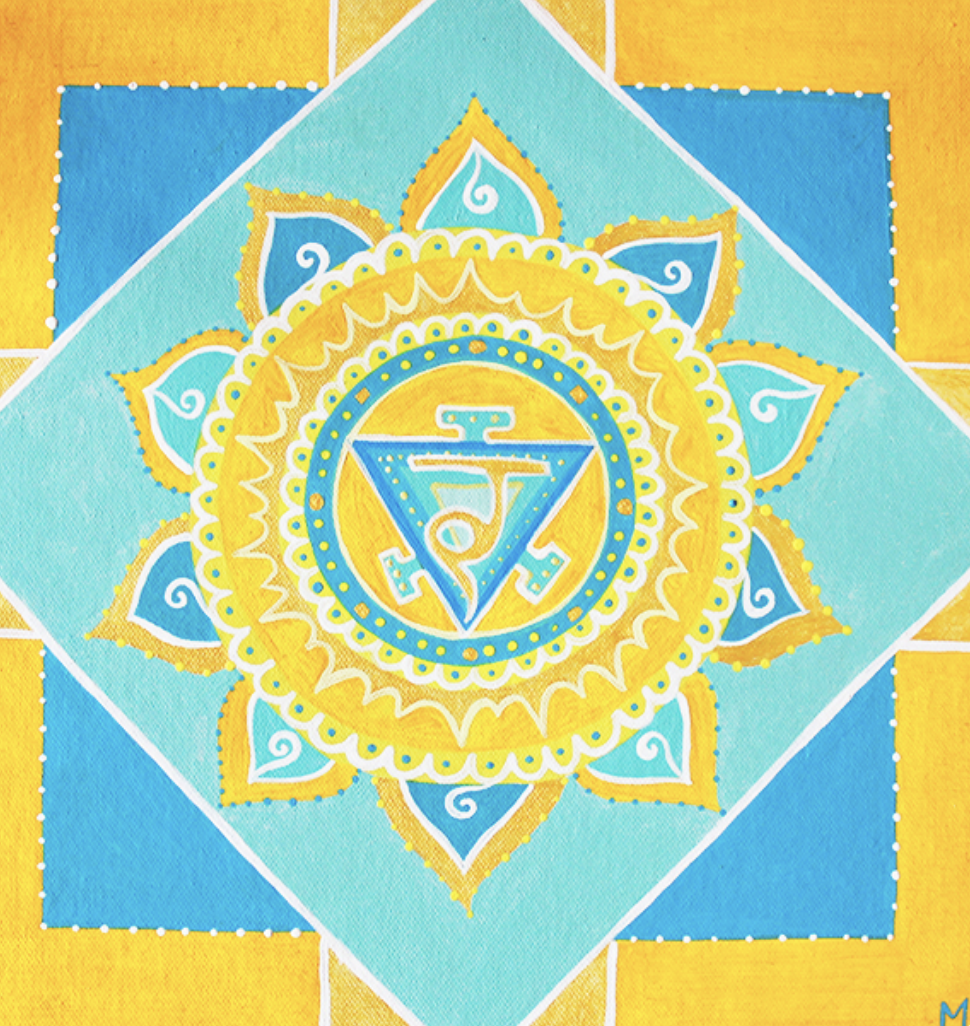
Manipura translates as “resplendent” or “lustrous gem” and is located slightly above the navel in the solar plexus region. Known as the Solar Plexus Chakra, it represents personal power, self-identity and the inner fire that drives action and transformation.
Associated with ten petals, the element of Fire, the colour yellow, the pancreas, the mantra Ram, and the sense of sight, this chakra symbolises vitality, clarity and willpower. Its symbolic animal, the ram, reflects strength, determination and forward movement. Physically, Manipura connects to the stomach, spleen, liver, digestive system, muscles and the epigastric region, as well as metabolic processes and stress response.
Energetically and psychologically, it governs confidence, autonomy, ambition and the desire to act, acquire and influence the world. When balanced, this chakra supports courage, healthy self-esteem, motivation, generosity and clarity of direction. When imbalanced, it may manifest as anger, control issues, insecurity, stubbornness, lack of confidence, discouragement or emotional volatility. In somatic and integrative work, Solar Plexus balance reflects the ability to act with strength without aggression, to lead without domination and to express power without losing emotional regulation.
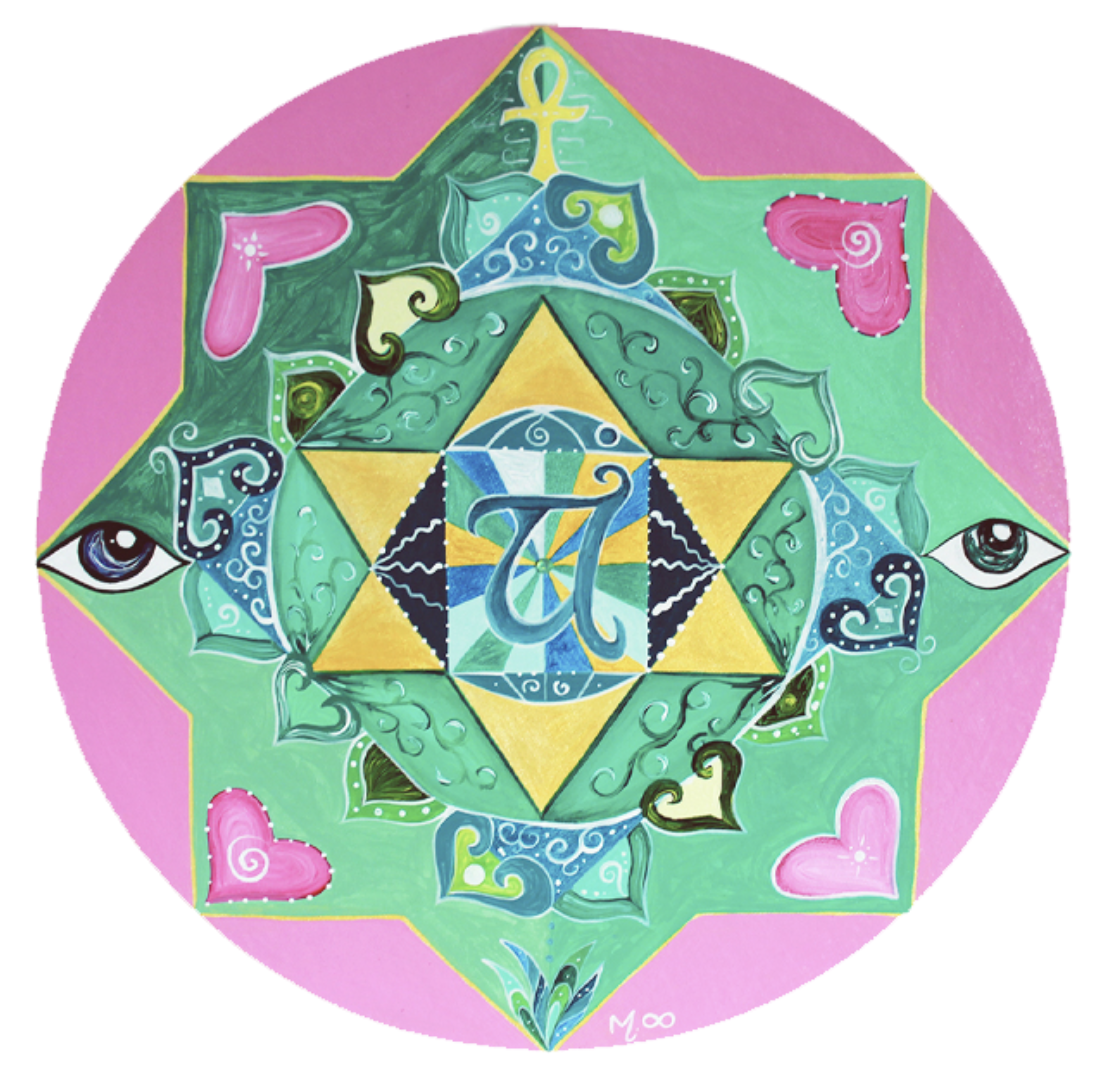
Anahata (Heart Chakra): Love, Compassion and Emotional Integration
Anahata translates as “unhurt,” “unstruck” or “unbeaten,” symbolising a space within us that remains whole despite life’s wounds. Located in the centre of the chest, the Heart Chakra represents love, connection and emotional balance. Associated with twelve petals, the element of Air, the colours green or pink, the thymus gland, the mantra Yam, and the sense of touch, this chakra reflects openness, relational harmony and compassion.
Its symbolic animal, the antelope, represents gentleness, sensitivity and grace. Physically, Anahata connects to the heart and cardiac plexus, lungs, breasts, blood, skin, lymphatic and circulatory systems, areas linked to breath, circulation and vitality. Energetically and psychologically, it governs affection, forgiveness, empathy, trust and the ability to serve others without losing oneself. It is often described as the bridge between lower (physical) and higher (spiritual) chakras, integrating instinct with awareness.
When balanced, the Heart Chakra supports generosity, acceptance, emotional maturity and authentic connection. When imbalanced, it may manifest as emotional closure, fear of intimacy, loneliness, detachment, resentment, humiliation or the need to dominate or control. In somatic and integrative work, Heart Chakra balance reflects the ability to remain open without becoming overwhelmed, to love without losing boundaries and to forgive without denying one’s own needs.
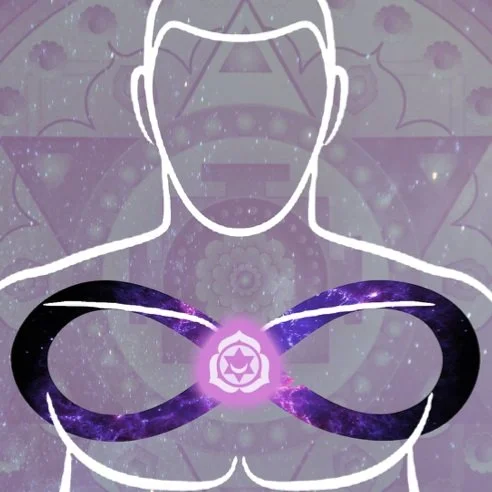
Higher Heart Chakra (Andara): Compassion Beyond the Ego
The Higher Heart Chakra, sometimes referred to as the Andara or Etheric Heart, is located slightly above the traditional Heart Chakra, near the upper chest and below the collarbones, and is associated with the thymus gland. The word thymus derives from the Greek term for “vital energy,” reflecting its role in immune function and energetic resilience. This centre is linked to empathy, enthusiasm and expanded compassion, moving beyond personal emotion into a more universal form of love.
Physically, the thymus supports the immune system by regulating defence mechanisms against pathogens and cellular imbalance, symbolising protection and discernment at both biological and energetic levels. Energetically, the Higher Heart Chakra relates to the expression of truth beyond ego identity, where forgiveness, service and unconditional compassion emerge. It is also associated with the vibration of sound and spoken word, suggesting that conscious communication and authentic expression can influence the subtle body and emotional field.
When balanced, this centre supports openness without naivety, compassion without self-sacrifice and spiritual awareness grounded in integrity. In integrative and somatic work, Higher Heart balance reflects the ability to connect deeply while maintaining clarity, boundaries and immune resilience, emotionally and physically.
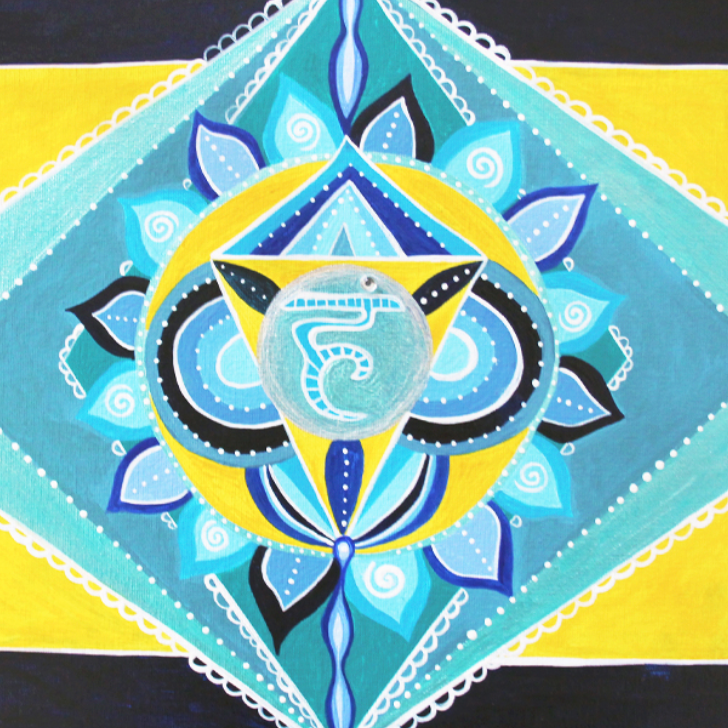
Vishuddha (Throat Chakra): Expression, Truth and Authentic Communication
“Vi” means “especially,” and “Shuddhi” means “pure”, together, Vishuddha translates as “especially pure.” Located in the throat region, the Throat Chakra represents communication, truth and higher expression. Associated with sixteen petals, the element of Ether (space), the colour blue, the thyroid gland, the mantra Ham, and the sense of hearing, this chakra symbolises clarity, resonance and the power of voice.
Its symbolic animal, the white elephant, reflects strength combined with wisdom and purity of intention. Physically, Vishuddha connects to the thyroid and parathyroid glands, jaw, mouth, tongue, oesophagus, neck, larynx, vocal cords, trachea and cervical spine, all structures involved in speech, expression and regulation of metabolism. Energetically and psychologically, it governs intellectual development, communication skills, personal will and the capacity to express truth with integrity.
When balanced, this chakra supports authentic speech, creative expression, courage, patience, coherence, loyalty, clarity and true listening. When imbalanced, it may manifest as fear of judgment, difficulty speaking up, excessive talking, dishonesty, shame, manipulation or a sense of injustice. Aligning with Vishuddha means learning to communicate with authenticity and emotional regulation, speaking truth without aggression and listening without defensiveness. In integrative and somatic work, Throat Chakra balance reflects the ability to express feelings clearly, maintain boundaries and communicate from a centred, self-aware place. Rebalancing the lower chakras often prepares the ground for this higher level of conscious expression.
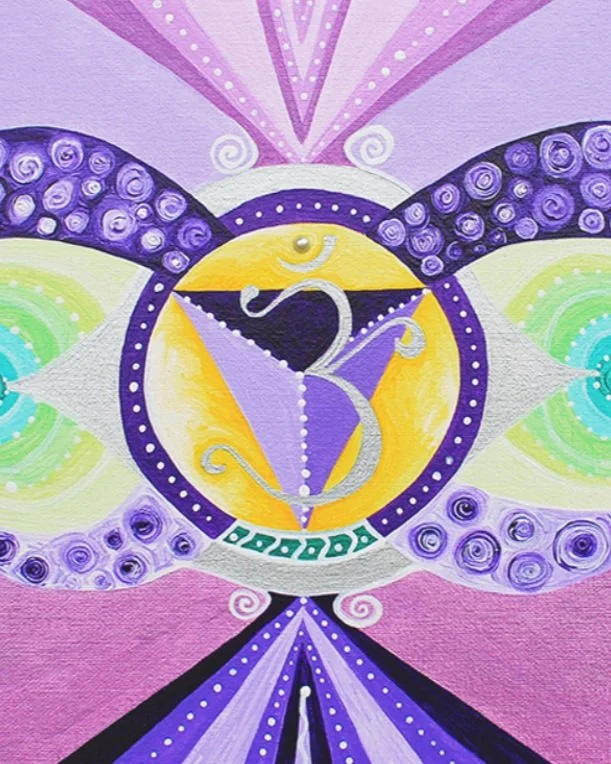
Ajna (Third Eye Chakra): Intuition, Inner Vision and Higher Awareness
Ajna means “command” or “beyond wisdom” and is located in the centre of the brain, behind the point between the eyebrows. Known as the Third Eye Chakra, it symbolises perception beyond ordinary sight and the integration of intuition and intellect. Traditionally represented by two main petals, Atma (Self) and Paramatma (Higher Self), each containing one hundred subtle vibrations, Ajna reflects the union between individuality and higher consciousness. It is associated with the element of Light, the colour indigo, the pituitary gland, the mantra Om, and the sixth sense. Its symbolic animal, the owl, represents insight, discernment and the ability to see through darkness. Physically, Ajna connects to the left eye, head, lower brain, sinuses, nose and ears, areas related to perception and sensory integration.
Energetically and psychologically, the Third Eye Chakra governs intuition, clarity of thought, imagination, dream activity and spiritual will. It symbolises the balance between dual forces, sun and moon, logic and intuition, masculine and feminine, integrating them into unified perception. Ajna coordinates the functions of the lower chakras and supports psychosomatic balance, helping regulate emotions while maintaining a stable sense of identity. When balanced, this centre supports mental clarity, intuitive intelligence, self-awareness and the capacity to see beyond surface appearances.
When imbalanced, it may manifest as confusion, rigid thinking, delusion, excessive fantasy, spiritual bypassing or difficulty distinguishing intuition from fear. In integrative and somatic practice, strengthening Ajna reflects the development of reflective awareness, the ability to pause, observe thoughts without being consumed by them, and align perception with grounded reality. The Third Eye represents the meeting point between inner wisdom and embodied experience, supporting mature discernment rather than illusion.
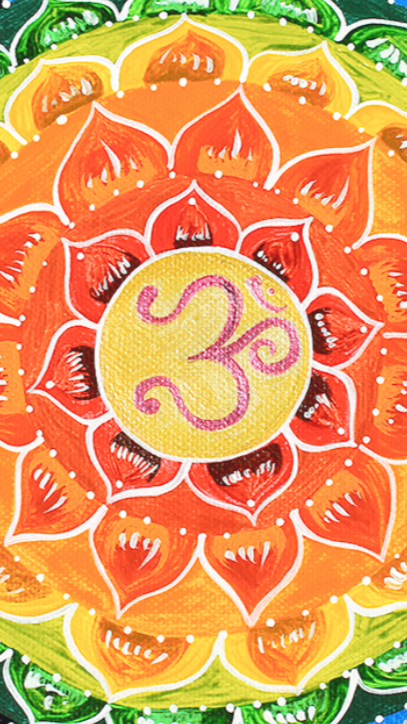
Sahasrara (Crown Chakra): Consciousness, Integration and Transcendence
Sahasrara means “thousand-petaled” and is located at the crown of the head. Often depicted with one thousand petals, it symbolises expanded consciousness and spiritual integration. It is associated with the element of the cosmos, the colours purple, white or gold, the pineal gland, and the mantras Hri, Aum or Om. Rather than linking to a physical sense, Sahasrara represents awareness beyond the individual self. Its symbolic form, sometimes represented as an egg, reflects potential, unity and the origin of consciousness. Physically, it connects to the cerebral cortex, central nervous system, upper skull, hair and right eye, highlighting its relationship to perception, cognition and higher neurological functioning.
Energetically and philosophically, the Crown Chakra represents unity, transcendence and the integration of all lower energy centres. It is sometimes called Brahmarandhra, “the doorway to higher consciousness”, and is described as radiating pure light, containing all colours within it. In traditional teachings, all Nadis (energy channels) converge here, symbolising the merging of individual awareness with universal consciousness.
Psychologically, Sahasrara reflects the capacity for meaning, perspective and connection to something larger than personal identity. When balanced, it supports clarity, humility, wisdom, expanded perception and deep inner stillness. When imbalanced, it may manifest as spiritual disconnection, nihilism, rigid belief systems or dissociation disguised as transcendence. In integrative and somatic practice, Crown Chakra balance is not about escaping reality but about integrating insight with grounded embodiment. True awakening is not withdrawal from life, it is the ability to remain present, regulated and connected while holding a broader perspective of existence.
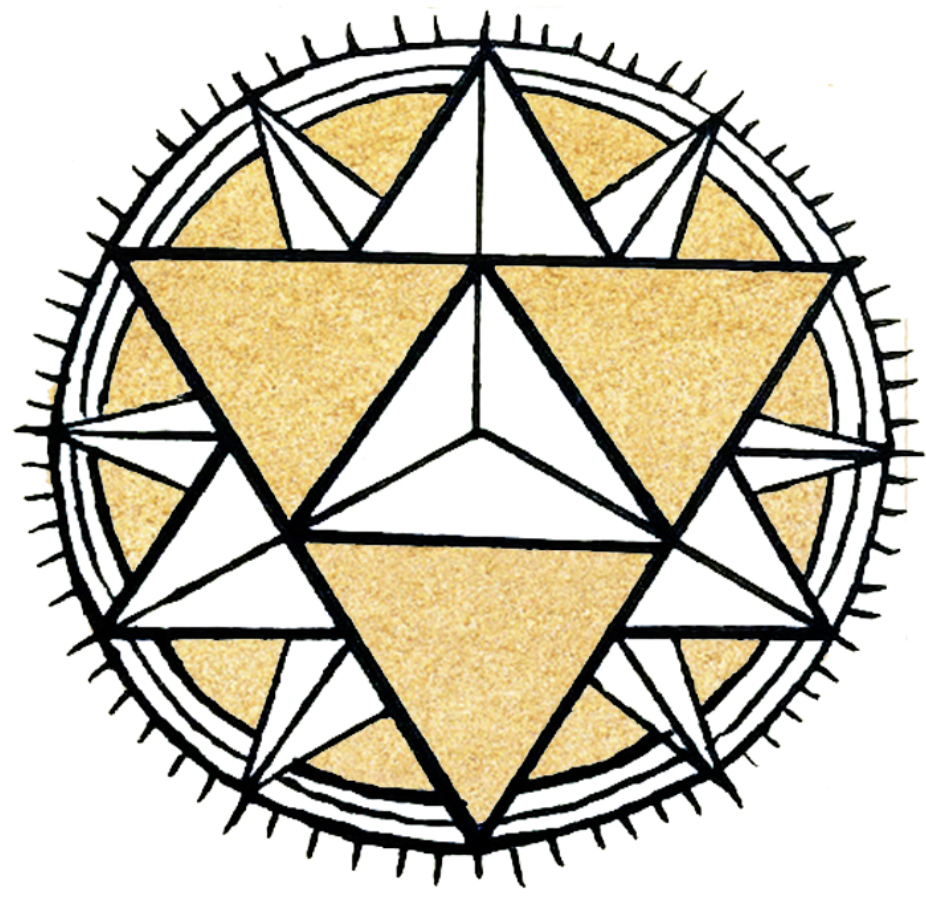
Soul Star Chakra (Eighth Chakra): Higher Purpose and Transcendent Awareness
Often described as “the beginning and the end,” the Soul Star Chakra is located a few inches above the head. Associated with the element of the Divine or Soul, its colours are often described as white, silver or violet. Unlike the lower chakras, it is not linked to a physical gland but to states of transcendence and expanded awareness. Its “sound” is often described as silence, the stillness beyond thought, and its symbolic qualities include timelessness, spiritual vision and unity. In some traditions, it is represented by the dove or hawk, symbols of higher perspective and spiritual insight.
The Soul Star Chakra is sometimes referred to as the “Star of the Healer,” as it is associated with spiritual guidance, expanded consciousness and connection to higher purpose. In esoteric traditions, it relates to shamanic awareness, intuition and connection to subtle dimensions of experience. Rather than being purely mystical, this chakra can also be understood psychologically as the capacity to hold a larger perspective of life, beyond ego identity, while remaining grounded in human experience. It symbolises compassion, selflessness and alignment with deeper meaning.
From an integrative viewpoint, the Soul Star represents the bridge between the personal self and transpersonal awareness. It reflects the human need for purpose, coherence and belonging to something greater than individual achievement. Practices such as meditation, breathwork and contemplative silence are traditionally used to cultivate awareness of this centre. In modern therapeutic language, this chakra represents existential integration, the ability to connect spiritual insight with embodied living. True activation of this centre is not about escaping reality or bypassing the human experience, but about integrating higher awareness with grounded responsibility and presence in the physical world.
Chakras and Emotional Regulation: What Does It Mean to “Balance” Chakras?
From a modern perspective, the chakra system can be understood symbolically alongside the nervous system. When we experience trauma, chronic stress or emotional overwhelm, the body stores these experiences. This may feel like “blocked energy” in certain areas of the body.
For example:
• Chronic anxiety may relate to root chakra themes of safety
• Relational trauma may affect heart chakra expression
• Suppressed anger may relate to solar plexus imbalance
Somatic awareness helps reconnect sensation, emotion and meaning, allowing integration rather than suppression.
Chakra balance does not mean perfection or constant positivity. It refers to: emotional regulation, internal coherence, psychological flexibility, alignment between thoughts, feelings and actions.
Balance happens gradually through: breathwork, body awareness, relational processing, mindfulness, trauma-informed integration. It is less about “activating” something mystical and more about restoring stability in the nervous system and emotional body.
The Chakra System in Modern Integrative Therapy
In my integrative work, the chakra system is used as a reflective map rather than a rigid belief structure. It supports exploration of themes such as:
• safety and grounding
• boundaries and self-worth
• relational openness
• authentic expression
• identity and meaning
Combined with somatic counselling and emotional processing, this framework helps clients understand how their experiences live in the body.
When Chakra Work May Be Helpful
Chakra-based exploration can support:
• anxiety and chronic stress
• relational difficulties
• emotional numbness
• low self-worth
• burnout
• identity confusion
• feeling disconnected from self
It is especially helpful for individuals who resonate with mind–body integration and experiential approaches.
The chakra system is one of many models for understanding human experience. It does not replace medical or psychological care but can complement trauma-informed therapeutic work. Healing is not about fixing yourself. It is about restoring connection between body, emotion and awareness.
What are chakras?
Chakras are traditional energy centres described in yogic philosophy that correspond to physical, emotional and psychological themes.
Can chakra healing help with anxiety?
Chakra-based practices combined with somatic regulation may help individuals explore underlying themes of safety, control and emotional balance.
Are chakras scientifically proven?
Chakras are part of ancient spiritual traditions. While not medically measurable, their themes often overlap with modern understandings of nervous system regulation and emotional processing.
If this resonates with your experience, I offer trauma-informed somatic counselling in Brighton and online, supporting people to move from reactive relational patterns to embodied, authentic connection. You’re welcome to book a free discovery call to explore working together.
If this topic resonates with you and you’d like to explore these ideas more deeply, you can discover my book on Amazon here. It expands on the foundations of subtle energy, inner architecture and embodied awareness in a practical and accessible way.