
What Is Prana? Nadis, Aura and the Subtle Energy Body Explained
What Is Prana?
Prana (from the Sanskrit प्राण, prāṇa) is commonly translated as “life force,” “vital energy” or “breath.” In yogic philosophy, prana represents the subtle force that animates all living beings.
Across cultures, this life force has been described with different names:

Ki (Japanese traditions)
Qi or Chi (Chinese medicine)
Holy Spirit or Breath of Life (Western mysticism)
Prana is closely associated with breath. Through breathing, we do not only absorb oxygen — we engage in the constant exchange of energy between the body and the environment.
In traditional teachings, the sun is considered a primary source of pranic vitality, symbolising the continuous movement and renewal of life.
From a modern perspective, conscious breathing practices influence the nervous system, emotional regulation and mental clarity — which may be one way ancient traditions described pranic flow.
How Prana Moves Through the Body
According to yogic and esoteric traditions, prana enters the organism primarily through the breath and circulates through a network of subtle channels known as Nadis. Every breath nourishes not only the lungs but the entire energetic system. Just as water cleanses the skin, breath is said to cleanse and regulate the inner system. Conscious breathing practices aim to:
• increase awareness
• balance internal energy
• calm mental reactivity
• support emotional integration
What Are Nadis?
The word Nadi (नाडी) translates as “tube,” “channel” or “flow.”
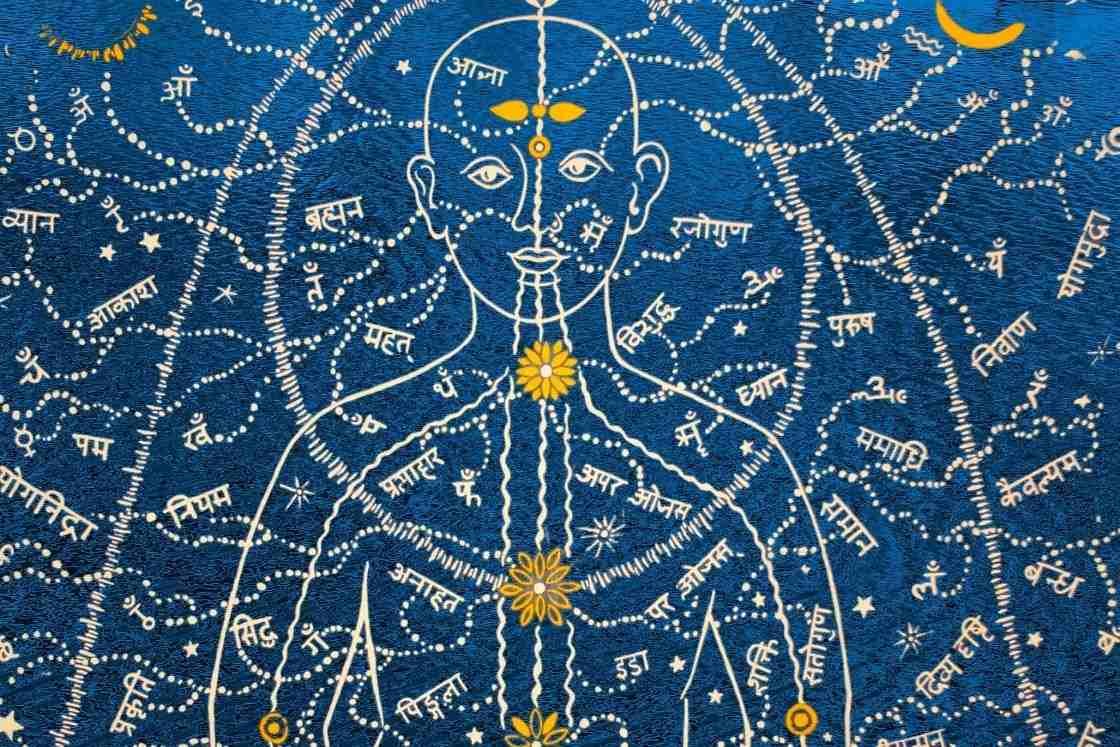
In yogic philosophy, Nadis are subtle energy pathways that distribute prana throughout the body. They are often described as the energetic counterpart of blood vessels in the physical body.
Traditional teachings speak of thousands of Nadis forming an intricate network connected to organs and Chakras. Some Egyptian and yogic sources describe up to 72,000 or even 125,000 Nadis, though numbers vary between traditions.
The three principal Nadis are:
Ida: Associated with cooling, lunar, receptive energy.

Pingala: Associated with warming, solar, active energy.
Sushumna: The central channel running along the spine, often described as the path of balance and spiritual awakening.
These channels are said to intersect at the Chakra centres along the spine. When energy flow through these channels is described as “blocked,” it symbolically refers to stress, trauma or imbalance affecting the system. From a somatic viewpoint, chronic stress, poor lifestyle habits and emotional suppression can affect breathing patterns and nervous system regulation, which ancient systems described in energetic language.
What Is the Aura?
The aura is described in many traditions as the subtle energy field surrounding the body.
It is often portrayed as a bio-luminescent or electromagnetic field that extends beyond the physical body and reflects emotional, mental and spiritual states.
In esoteric systems, the auric field is said to fluctuate in colour, density and size depending on internal balance.
The aura is commonly described as consisting of multiple layers or subtle bodies, each associated with different aspects of human experience.
The Subtle Bodies Explained
Many energy traditions describe seven primary subtle bodies:

• Etheric Body
• Emotional Body
• Mental Body
• Causal Body
• Celestial Body
• Divine Body
• Ketheric Body
These layers symbolically represent different dimensions of experience, physical vitality, emotions, thought patterns, deeper consciousness and transpersonal awareness. Some traditions suggest that disturbances appear in the subtle field before manifesting physically. While this remains metaphysical language, it parallels modern understandings that stress and trauma influence health before visible symptoms arise.
The Aura and Emotional Regulation
In energetic language, a “healthy aura” is described as protective and resilient, able to filter external influences.
In psychological language, this may correspond to:
• emotional boundaries
• nervous system resilience
• psychological containment
When we feel grounded and regulated, we are less affected by external stressors. Ancient traditions described this as maintaining a strong auric field.
Breath, Prana and Conscious Awareness
Conscious breathing techniques are one of the most accessible ways to influence pranic flow.
Slow, regulated breathing:
• calms the nervous system
• reduces anxiety
• increases presence
• improves clarity
This connection between breath and state is one of the bridges between ancient pranic teachings and modern somatic psychology.
Integrating Ancient Language with Modern Understanding
Concepts such as prana, nadis and aura come from spiritual and esoteric traditions. In contemporary integrative practice, these ideas are often translated into the language of nervous system regulation, breathwork and trauma-informed care. While not measurable in conventional biomedical terms, they offer symbolic maps for understanding vitality, regulation, emotional balance, and embodied awareness.
Whether approached spiritually or symbolically, the core message remains:
Breath affects state. State affects perception. Perception affects behaviour.
Working consciously with breath and body awareness supports integration and balance.
If this resonates with your experience, I offer trauma-informed somatic counselling in Brighton and online, supporting people to move from reactive relational patterns to embodied, authentic connection. You’re welcome to book a free discovery call to explore working together.
If this topic resonates with you and you’d like to explore these ideas more deeply, you can discover my book on Amazon here. It expands on the foundations of subtle energy, inner architecture and embodied awareness in a practical and accessible way.