“Turn the Other Cheek”
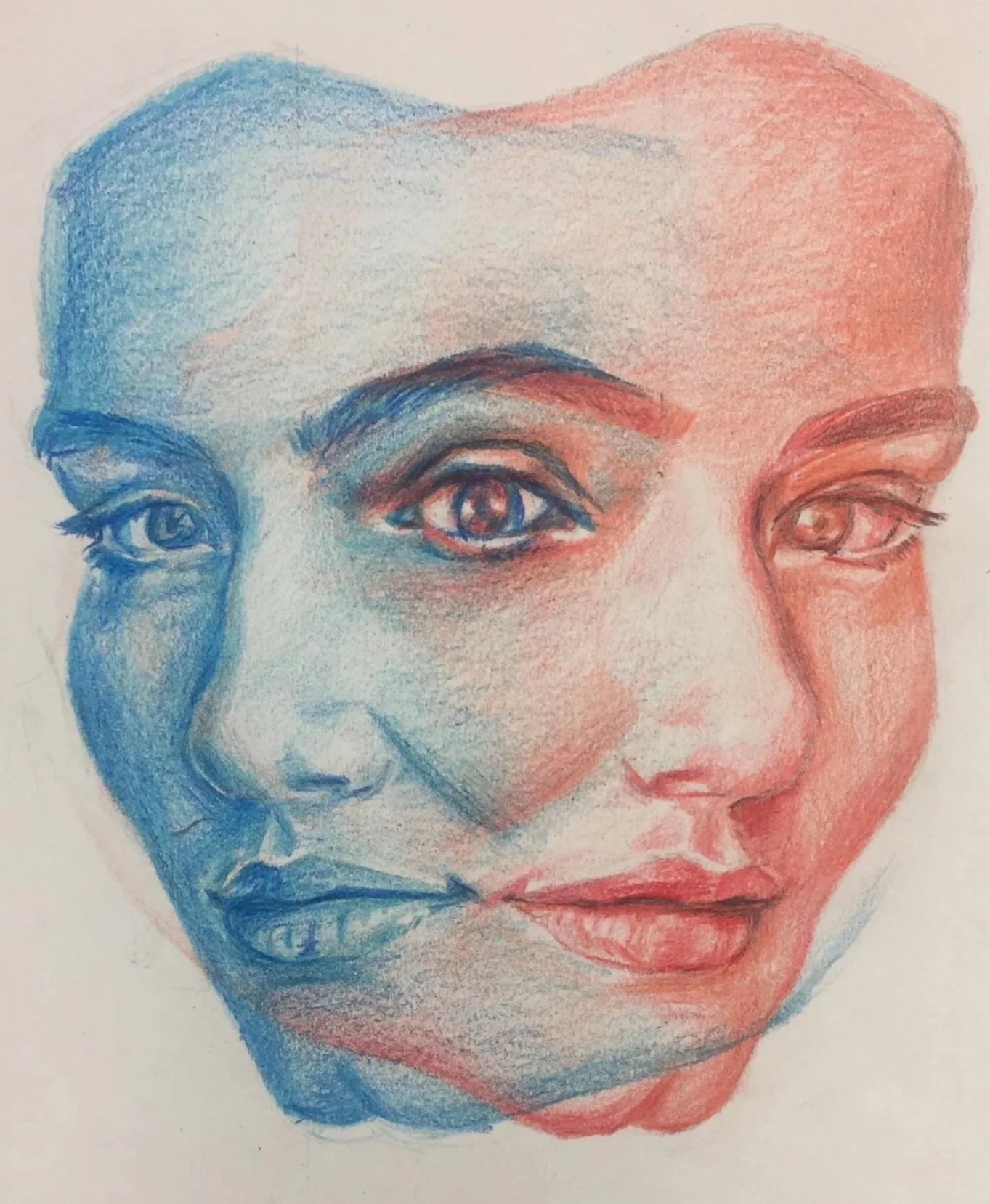
Today I want to offer a reflection on the inner polarities and complexities that arise when we are in conflict either with ourselves, with others, or with both. One of my favourite areas of inquiry is exploring ancient texts through a metaphorical lens. I follow different traditions and lines of research that focus on inner polarities, contradictions, and the many layers of human experience.
What we often call reality is only the surface, the skin of life, not its depth or its mystery, and today I want to focus on one of the most well-known and misunderstood phrases: Turn the other cheek. Matthew 5:39
And yet, today I want to focus on one of the most well-known and misunderstood phrases: Turn the other cheek. Matthew 5:39
What did Jesus really mean by this?
To be hurt twice?
That cannot be it, and I don’t read this as an invitation to non violence or a radical act of dignity either… it’s way more profound than that. This question led me to a beautiful interpretation offered by one of my favourite modern philosophers, Igor Sibaldi, who captures the paradox of conflict in relationships and why we so often remain stuck within it.
He suggests that if you are arguing with someone, it is because you are showing that person only one aspect of yourself.
In that moment, the invitation is not to convince the other, but first to show the other side of yourself to yourself.
When that happens, the conflict often dissolves almost immediately.
When we argue, we become polarised around the need to be right. Everything starts revolving around our position. And needing to be right is, in fact, a way of seeing very little of ourselves, it means placing ourselves entirely on one side. In this sense, the other person resembles us more than we might like to admit: they, too, are showing only one part of themselves.
So if we truly want conflict to come to an end, the invitation is simple, look at the other side of yourself. This interpretation touches something very close to my heart and reflects the kind of inquiry I return to daily.
I find it deeply exhausting when we try to make life simpler than it is.
Life is not mono-dimensional.
And neither are we.

When we attempt to understand, manage, or control experience so that only what feels acceptable remains, what we often call “growth” becomes a narrowing, an effort to feel only what we approve of, to express only what appears coherent, positive, resolved, or, most importantly, painless.
But life does not move in straight lines. And our pain, wounds, and moments of misery are not its centrepiece, they are part of a much wider, richer spectrum.
When we make space for only one side of ourselves, the competent, regulated, insightful, generous parts, we do so at the cost of our wholeness. The parts that don’t fit, that feel messy or unresolved, don’t disappear. They go underground. They turn into symptoms, projections, and relational conflicts.
Some of the most meaningful moments of my life are also the ones that have hurt the most. They didn’t hurt because of the situation itself, but because of the amount of resistance I had built around not wanting to see the other side of myself. My ego, understandably, didn’t want to let go. It couldn’t see the benefit in doing so.
I have learned that change is not the issue. The pain I feel rises in direct proportion to the resistance I cling to.
I protected those parts, pathologies them, made excuses for them, until I could hold on no longer. That resistance slowly became an illness, became chronic, became a scar disguised as pride. In trying to protect myself, I ended up wounding myself further in the attemped of protecting me. And then I reached a threshold, the understanding that I can observe and be without fragmenting. That I can stand on my own side even on the most miserable days, even when the world seems not to approve of me.
To be present to the full spectrum, when I can. To remain with complexity without labelling, collapsing, or micromanaging. This is what I now understand as love.
Holding, I have learned, is not passive. It means remaining present long enough for truth to reveal itself, without forcing timing, meaning, or outcome. It means making space for what is, even when that includes my own misaligned behaviour, reactions, and incongruences. Because there are moments when things don’t make sense, and circumstances cannot be explained rationally.

It is easy to appreciate the parts of ourselves that are cooperative, capable, intelligent, or gifted. These parts are socially rewarded. They make life smoother. Sometimes they even earn us praise, recognition, awards we proudly place on shelves as proof that we are, overall, “good” people. They fit neatly into the image of who we think we should be.
And yet, many of us live in constant battle with other aspects of ourselves, the misunderstood, reactive, withdrawn, emotional, contradictory, or mysterious parts. The ones that rebel. The ones that resist reasoning. Often, we carry an unspoken idea of perfection that quietly excludes what we don’t like or cannot make sense of.
But exclusion or isolation is not love. It is management.
Love begins when we stop overanalysing and allow ourselves to move as a whole, without leaving anything behind.
The Self, can hold weight and complexity without tipping into extremes or drama. From this centre, we are less pulled by absolute positions, reactive narratives, or misleading certainties. No part needs to dominate another. Wholeness is lived when what feels contradictory is brought into awareness and held within the whole. This is where real choice emerges, not from control, but from staying with ourselves across changing moments.
We do the same thing with others.
We say we love people, but often we love only the parts of them that align with our needs, mirror our values, or validate us. When those needs are not met, when the other behaves differently than we expect, the relationship can quickly shift from connection to threat or disappointment.
Suddenly it becomes personal. Suddenly it feels like something is being done to us. And yet, very often, the people who challenge us most deeply are touching something unresolved within us, not because they are “right,” but because they activate an internal polarity that has never been allowed to coexist.
The work is not to tolerate mistreatment. Nor is it to spiritualise discomfort.
It is to discern, without spiralling, blaming or attacking.

What we often call the shadow is not something dark or wrong.
It is simply what has not yet been welcomed.
When we stop treating these aspects as enemies, when we move beneath the surface, we begin to see the whole, the layers of existence coming together to reveal a fuller picture. Beyond the need to be right, something else becomes visible. Truth is not loud. It does not need validation.
It is a quiet space within the soul that knows. And in this moments, we return home, to a state where everything can exist in harmony. Even the most conflicting parts of us find a way to coexist and find purpose. As these parts integrate internally, their external manifestations lose their charge. The more I welcomed the aspects of myself with compassion the less destabilising it became to encounter them in others.
This is the self becoming Self. An awakening to a wider perspective, and to a truth that does not need defence.
Wholeness is not about resolution.
It is about presence.
To remain present without forcing meaning.
To love without fragmenting.
Maria.