
The Problem with Relationship Expectations: Learning to Meet Reality Instead of the Ideal
The Problem With Relationship Expectations: When the Idea of Love Replaces the Person

In relationships, the road to hell is often paved with expectations. Almost all of us carry an internal idea of what a “good” or “secure” relationship should feel like, look like or sound like.
But where did that idea come from? Maybe from:
Films
Culture
Family dynamics
Psychology or therapy language
Social media
Past experiences
Pain or hope
Over time, all of this creates a picture in our mind of what love should be. And here’s something I’ve noticed both personally and through my work: The more sophisticated our ideas about relationships become, the easier it is to relate to the idea rather than the person in front of us.
When Reality Doesn’t Match the Picture
When the relationship we experience doesn’t match the picture we carry in our mind, confusion begins. Self-doubt appears. Blame starts, sometimes towards ourselves, sometimes towards the other. We start wondering:
Am I doing something wrong?
Are they doing something wrong?
Is this relationship broken?
Little by little the connection begins to fracture. At times people try to talk about it. If we are able to stay present with our discomfort, there may be a difficult but honest conversation. But when facing our feelings feels too confronting, communication often becomes indirect. Messages replace dialogue. Texts replace presence.
And when even that feels too uncomfortable, someone disappears. And then labels begin to appear: He is… She is… They are…
But relationships rarely break because we are doing it wrong or because someone is not good enough. Very often they break because we are trying to live up to an idea of love that reality cannot sustain.

The Myth of the Perfect Partner
Some people may still unconsciously believe that at some point someone will appear who understands us perfectly, meets all of our needs, reads our mind, and makes the relationship feel effortless. This idea is deeply rooted in the stories we grow up with, romantic narratives that suggest love should simply “work” when we find the right person. But real relationships rarely unfold this way.
Relationships naturally involve contrast, differences, misunderstandings, moments of rupture, and the ongoing work of repair. They require two individuals who are willing to communicate, reflect, negotiate, and grow as they move through life together. Learning how to hold these contrasts with grace, rather than seeing them as proof that something is wrong, is one of the most important relational skills we can develop.
At the same time, it is important to recognise that not every relationship is meant to continue. When responsibility is avoided, when one person carries the emotional labour alone, or when dysfunction cannot be addressed openly and honestly, the relationship may no longer offer a healthy space for growth. In those moments, choosing to step away is not a failure but an act of clarity and self-respect.
Creating the Relational Space Between Us
The focus is not on learning the perfect model of relationships or trying to apply a formula that promises success. Relationships are far too complex to fit into a single model. What matters more is the space that is created between two people. In every relationship there is not only “me” and “you,” but also a third dimension, the relational space that emerges from our interactions.
This space is shaped by how we communicate, how we listen, how we handle conflict, and how willing we are to take responsibility for our own behaviours and reactions. It is not about fixing each other or carrying responsibility for the other person’s emotions. Rather, it is about recognising that while you are responsible for yourself and I am responsible for myself, we are both responsible for what unfolds between us. That shared relational field matters. It is something that grows over time, like a plant we cultivate together, requiring attention, honesty, repair, and care if it is to remain alive and healthy.
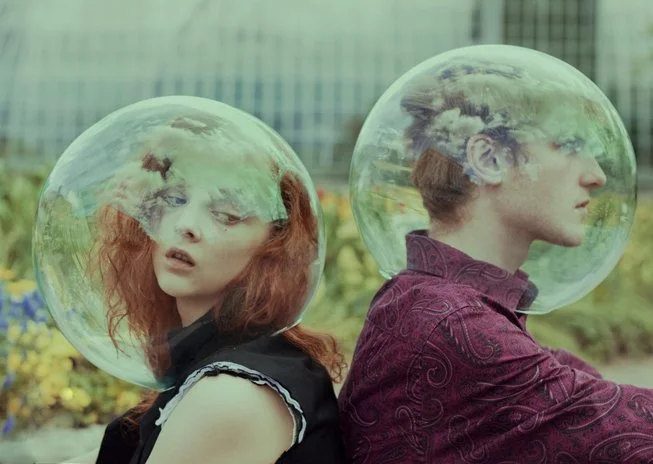
It took me a long time to understand something simple but profound. Love isn’t about getting the picture right. It’s not about:
the perfect partner
the perfect angle
the perfect relationship story
It’s about being willing to stay present with what is actually happening. Being with someone:
who can repair after conflict
who stays in conversation without blaming
who can depersonalise small things and see the bigger picture
who is willing to grow
Someone who can tolerate your challenging parts without hurting you for having them.
Understanding Relationship Patterns Through Attachment
One useful psychological framework that helps explain why we relate the way we do in relationships is Attachment Theory.
Attachment theory, originally developed by John Bowlby and later expanded by Mary Ainsworth, suggests that the emotional bonds we form with caregivers in early childhood shape how we experience intimacy, safety and connection in adult relationships.
These early relational experiences create internal “maps” of how love works. They influence how we respond to closeness, conflict, emotional needs and vulnerability.
Over time, psychologists have identified several common attachment styles that tend to appear in adult relationships.
Secure attachment
People with secure attachment generally feel comfortable with closeness and independence. They are more able to communicate needs openly, tolerate conflict and repair misunderstandings without immediately withdrawing or escalating.
Anxious attachment
Individuals with anxious attachment often fear abandonment or rejection. They may seek reassurance frequently and feel distressed when emotional closeness seems uncertain.
Avoidant attachment
Those with avoidant attachment tend to value independence strongly and may struggle with emotional vulnerability or closeness. When relationships become intense, they may distance themselves or withdraw.
Disorganised attachment
This pattern can involve a mix of anxious and avoidant responses. People may desire closeness but also fear it, often due to early relational experiences that felt confusing or unpredictable.
It’s important to remember that these patterns are not fixed identities. They are relational strategies we learned early in life in order to adapt and feel safe.
With awareness, reflection and relational work, these patterns can evolve. Relationships themselves often become the place where attachment patterns are revealed, and where healing can also begin.
Real Connection Has Rhythm
Real connection has rhythm. It’s a mindful dance. A back and forth. A gradual unfolding between two people.
And that is what we are exploring here. Not how to build the perfect relationship. But how to build something real.

A Simple Practice to Explore the Relational Space
Sometimes the most powerful way to understand a relationship is simply to pause and observe what is happening between two people in the present moment. Rather than focusing on who is right or wrong, couples can explore the quality of the relational space they are creating together.
You might try asking each other a few simple questions and listening without interrupting, defending, or correcting the other person’s experience.
Three questions to explore together:
What helps you feel safe, seen or understood in this relationship?
When we struggle or disconnect, what do you most need from me in those moments?
What would help us care better for the space between us moving forward?
The intention of this practice is not to fix everything in one conversation, but to develop curiosity and awareness. When two people are willing to listen and reflect honestly, the relational space becomes more conscious, and that awareness alone can begin to change the quality of the connection.
Three Questions to Reflect on Your Relationship Patterns
If you are reflecting on your own relational dynamics, these questions can offer a starting point.
1. Why do I keep attracting the same relationship patterns?
Often we unconsciously repeat familiar emotional dynamics because they mirror early relational experiences. What feels familiar can sometimes feel safer than what is healthy.
2. Why do relationships trigger such strong emotions?
Romantic relationships activate our deepest attachment needs: belonging, safety, validation and connection. When these needs feel threatened, our nervous system reacts strongly.
3. How can relationships become healthier and more balanced?
Healthy relationships grow through emotional awareness, honest communication, boundaries and the willingness from both partners to reflect and take responsibility for their part in the dynamic.
If this resonates with your experience, I offer trauma-informed somatic counselling in Brighton and online, supporting people to move from reactive relational patterns to embodied, authentic connection. You’re welcome to book a free discovery call to explore working together.