
Kids Why Children Take Things Personally: Understanding Shame, Attachment and Emotional Development

When We Take Things Personally: From Childhood to Adulthood and Relational Patterns
A few months ago, while I was in the shower, my son began calling me in tears. I had soap in my hair and could not respond immediately. In that moment, I thought: children take it personally. A four-year-old cannot understand that my delay has nothing to do with him. He does not yet have the cognitive or emotional maturity to interpret circumstances objectively. All he can feel is: “I needed you, and you didn’t come.”
That moment led me to reflect more deeply, especially on the periods after birth when I was physically unwell, exhausted and emotionally stretched. There were times when I simply could not show up as I wished. I wondered about the emotional meaning he might have made of those moments. It is natural for a child to personalise what they cannot yet contextualise. They do not consider external circumstances. They do not think, “Mum is tired because she hasn’t slept.” They feel absence as personal. What fascinates me is how often we continue this pattern as adults.
Children take things personally because their survival depends on attachment. Adults often do the same because parts of them still operate from those early attachment wounds. Without awareness, we carry childhood interpretations into adult relationships. Learning not to take everything personally requires emotional regulation, perspective and self-reflection. It asks us to pause before reacting and to consider: Is this truly about me? Or is this about something unresolved in the other person?
When we begin to separate circumstance from identity, we reduce unnecessary suffering, and relationships become less dramatic and more grounded.

Supporting Children So They Don’t Internalise Everything
Children do not need a shielded environment or the avoidance of all conflict. They need presence. Conflict is part of life. Disagreement, frustration and misunderstanding are inevitable in any family. What truly shapes a child’s emotional development is not the absence of tension, but the quality of repair. Perfection is not the goal, accountability is.
When parents are not overly anxious or excessively protective, when they do not rush to eliminate every discomfort, children learn something fundamental: emotions can be tolerated, processed and resolved. There is a natural process of desensitisation to life that happens through appropriate exposure, small challenges, manageable frustrations, relational ruptures, when guided with safety and support.
Avoiding all discomfort does not build resilience. Guided exposure does.
Presence Over Perfection: What Truly Helps Children Feel Safe
Developmentally, children build emotional regulation through co-regulation. They borrow the nervous system of the adult in front of them. When a parent can stay grounded during conflict, name what is happening and take responsibility when they make mistakes, the child learns that imperfection does not equal rejection. What helps children feel safe?
Clear and honest communication.
Emotional repair after conflict.
Naming and validating feelings.
Modelling accountability instead of blame.
Reassurance of unconditional connection.
When a parent says, “I was tired and I reacted harshly. That wasn’t your fault. I’m sorry,” something powerful happens. The child learns that conflict does not mean abandonment. That relationships can rupture and repair. This is how resilience is built. Not through control, but through relational safety. And for adults who are still carrying childhood interpretations of conflict or absence, therapy offers a space to reprocess what was once misunderstood. To revisit those moments with maturity, perspective and regulation. To separate what truly belonged to you from what did not.
Why Adults Still Take Things Personally
Often, we interpret events through the lens of our personal wounds. When past trauma or insecurity narrows our perception, everything starts to feel like confirmation of an old belief: “I’m not enough.” “I’m being rejected.” “I’m not valued.”

When we are caught in this wounded perspective, we stop listening clearly. Instead of holding space, we unconsciously project our insecurities onto others. What they say becomes distorted through our internal narrative. It can feel irrational, intense, even a little mad at times.
The truth is, when we are triggered, we are rarely responding to the present moment alone. We are responding from accumulated memory. As adults, we intellectually understand that people have their own lives, stressors and limitations. Yet emotionally, we often react as if everything is about us.
Someone is distant, we assume rejection.
Someone is tired, we assume disinterest.
Someone withdraws, we assume we did something wrong.
We rarely pause to ask: “What else could be happening in their world?” This tendency feeds drama, misunderstanding and unnecessary suffering in relationships. Sometimes I wonder, who is reacting in those moments? The adult self? Or the younger part that once learned to personalise everything?
I once had a friend who came to my home in tears. She was deeply in love but had just started a demanding job, working ten-hour days. Her body needed rest to adjust. She explained to her partner that she was exhausted and needed sleep in the evenings. He took it personally. “You obviously don’t want to be with me,” he said. “You never want to go out anymore.”
He broke up with her in anger. She was shocked. She was tired, overwhelmed and genuinely trying to adapt to a new phase of life. Yet his reaction turned her fatigue into rejection. Although I believed it was a good thing that he left, the emotional impact stayed with her for months. She felt guilty. She questioned herself. She internalised his reaction. And once again, I saw how quickly we personalise what is often about someone else’s insecurity or unmet need.
When Emotional Needs Meet Emotional Immaturity
There are moments in life when we feel overwhelmed and simply want to be understood. Sometimes all we need is to be heard, or maybe just a hug. But if the person in front of us struggles with emotional regulation or discomfort, they may react defensively. They might say:
“You shouldn’t feel this way.” “Look on the bright side.” “I had it much worse.” “Maybe it’s my fault.”
Or they might shut down completely. Instead of meeting emotion with presence, they try to fix, dismiss or redirect it. This doesn’t necessarily mean they don’t care. It may simply mean they lack the emotional capacity to hold the space. When two dysregulated nervous systems meet, misunderstanding escalates quickly.
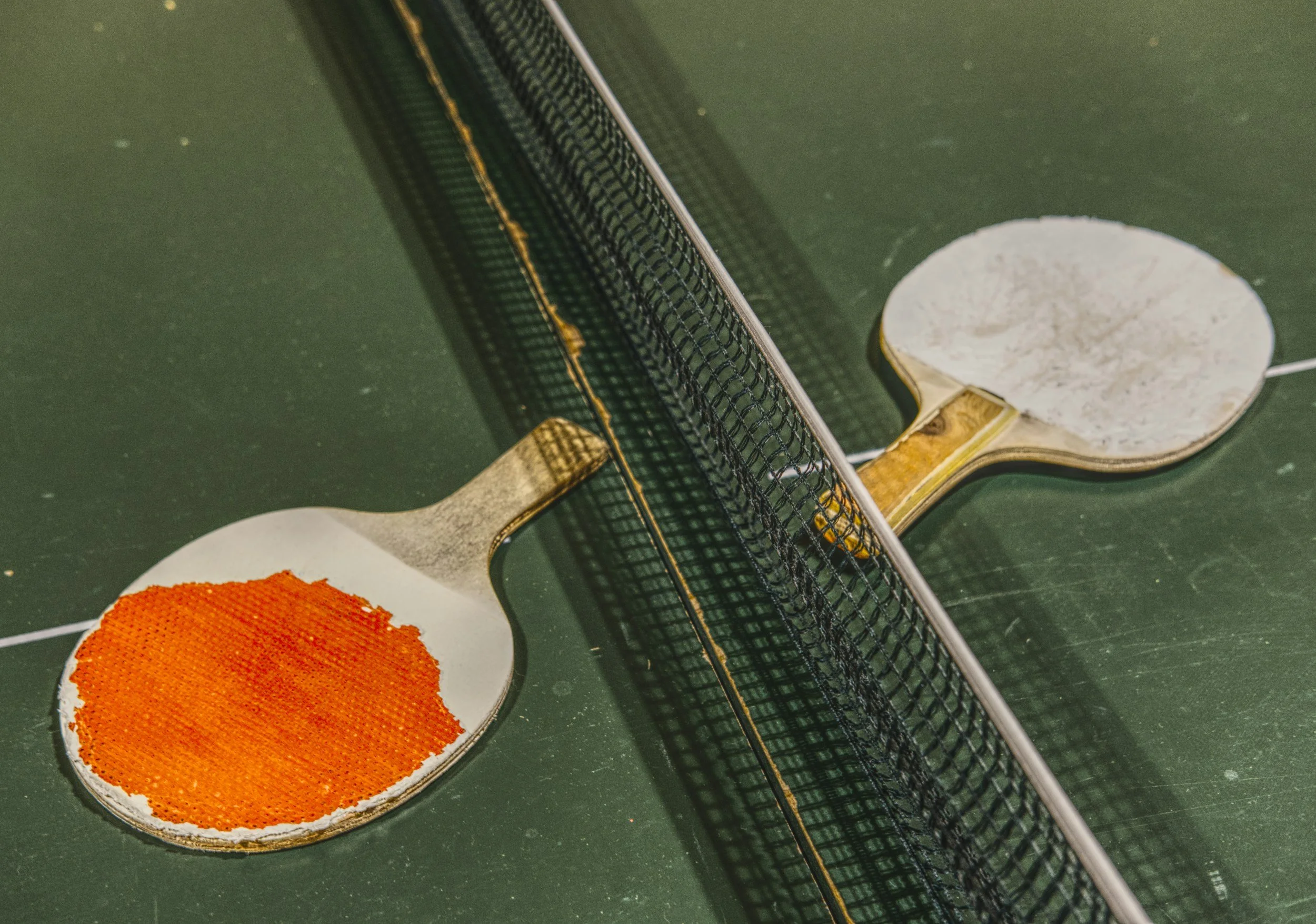
Breaking the Emotional Ping-Pong
Becoming emotionally mature requires courage and honesty. It means recognising when our reactions are disproportionate, even if the initial hurt felt real. It means asking ourselves:
Why did this affect me so strongly? What part of me is activated? Is this about the present moment, or an older wound? Adulthood is not about suppressing emotion. It is about taking responsibility for it. Instead of continuing the emotional ping-pong, the blaming game, the projection, the drama, we can pause. We can sit with what we feel. We can trace the emotion back to its origin. We can choose to respond rather than react.That pause is where growth happens. Learning not to take everything personally does not make us cold or indifferent. It makes us clearer, more grounded and more relationally responsible. And that changes everything.
How Do We Get Out of the Drama and Heal Our Inner Wounds?
Stepping out of relational drama begins with turning inward. My experience has taught me that emotional healing and inner child work are essential if we want authentic and conscious relationships. When we allow ourselves to feel the full spectrum, the entire rainbow of emotions stored inside — something powerful happens. The charge softens. The unspoken words finally move. The repetitive thoughts lose their grip.
Often, the “drama” we experience in adult relationships is not really about the present moment. It is the younger part of us trying to be seen, heard and acknowledged. The part that once felt unseen. Unloved. Unsupported. Misunderstood. As children, we did not always have the emotional safety, language or support to process what we felt. But as adults, we do.
Healing does not mean rewriting the past. We cannot change what happened. What we can change is our relationship to it. We can widen our perspective. We can reinterpret events with maturity instead of shame. We can offer ourselves the validation that was once missing. When we integrate these younger parts, our reactions soften. We stop projecting old wounds onto new situations. We expand our capacity for regulated, conscious and equal relationships, especially the relationship with ourselves.
Healing is not about becoming someone new. It is about becoming responsible for the parts that still need care. And when that happens, drama loses its fuel.
If this resonates with your experience, I offer trauma-informed somatic counselling in Brighton and online, supporting people to move from reactive relational patterns to embodied, authentic connection. You’re welcome to book a free discovery call to explore working together.